
How to Clean Tarmac Driveway Safely
- Sean Bolton
- May 3
- 6 min read

A tarmac drive can start to look tired long before it is actually worn out. Moss along the edges, green algae in shaded areas, tyre marks, oil spots and general traffic grime can make the whole front of a property look neglected. If you are wondering how to clean tarmac driveway surfaces properly, the key is using enough cleaning power to lift the dirt without being so aggressive that you scar or loosen the surface.
Tarmac is hard-wearing, but it is not the same as concrete or block paving. It has a softer, bitumen-bound surface, which means the wrong method can do more harm than good. That is why a careful approach matters, especially if the drive is older, sunken in places or already starting to break up.
Why tarmac needs a gentler cleaning method
One of the biggest mistakes people make is assuming every driveway can be cleaned in exactly the same way. Tarmac does not respond well to excessive pressure, very close jet washing or harsh chemical use. Unlike more rigid surfaces, it can lose its top layer if treated too aggressively. Once that happens, the finish can look patchy and the surface may become more vulnerable to future wear.
This is also why results vary depending on the age and condition of the drive. A newer, well-laid tarmac driveway will usually clean up well with the right equipment and technique. An older surface with loose stones, crumbling edges or existing cracks needs much more care. In some cases, a full deep clean is sensible. In others, a lighter treatment is the safer option.
How to clean tarmac driveway surfaces step by step
Start by clearing the area fully. Move cars, bins, pots and anything else sitting on the drive. Sweep away loose dirt, leaves and grit so you are not simply pushing debris around once the cleaning begins. This also lets you see the real condition of the tarmac, including any weak spots that need extra caution.
Before using water or treatment, inspect the surface closely. Look for soft patches, open cracks, loose edges and areas where weeds or moss have taken hold. If the tarmac is breaking apart already, blasting it with a powerful lance is likely to make things worse. In those cases, the goal is to improve the appearance and safety of the driveway without accelerating damage.
The next stage is dealing with organic growth. Moss, algae and lichen are common on tarmac, especially where trees, walls or north-facing aspects keep the area damp. These growths are not just unsightly. They also make the surface slippery underfoot, particularly in wet weather. A suitable treatment can help loosen them and reduce regrowth, but it needs to be appropriate for the surface.
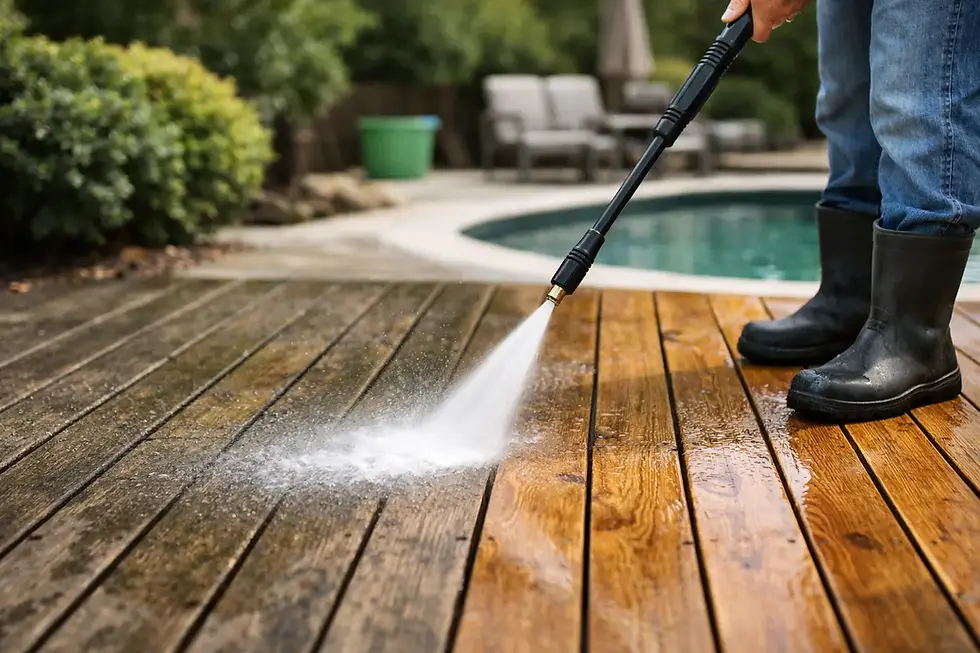
When it comes to washing, lower pressure and proper control are what matter. A fan nozzle is generally safer than a concentrated pinpoint jet, and keeping the lance at a sensible distance helps avoid marking the surface. The aim is to rinse and lift contamination gradually, working in a steady pattern rather than attacking one spot. If you hold pressure too close to tarmac, you can etch lines into it or strip away fine material from the top.
That is especially relevant with oil stains. Fresh oil can sometimes be treated effectively, but older staining may not disappear completely from tarmac because the surface can absorb it. Scrubbing with the wrong product or forcing high pressure into the area often spreads the stain or damages the finish around it. Improvement is realistic. Perfection depends on how deep the contamination has gone.
What to avoid when cleaning tarmac
The quickest way to damage a tarmac driveway is to treat it like concrete. Very high pressure, turbo nozzles used too closely and strong caustic chemicals can all leave visible damage. Once the surface binder is disturbed, the drive may start to look rough, faded or uneven.
Household bleach is another area where caution is needed. While people often reach for it to tackle green growth, overuse can create patchiness and may affect nearby plants if it runs off into borders. If any treatment is used, it should be applied carefully and rinsed correctly.
Wire brushes and overly aggressive scrubbing can also mark the top layer. Tarmac responds better to controlled cleaning than brute force. If a stain or patch of growth is stubborn, repeated gentle treatment is usually safer than one heavy-handed attempt.
Dealing with moss, algae and weeds on tarmac
Organic growth is one of the most common reasons people look up how to clean tarmac driveway areas in the first place. It makes a drive look older than it is and can quickly become a slip risk. Moss often builds up around edges and in shaded spots, while algae leaves a green film that is easy to miss until the surface becomes slick.
The best approach is usually to remove loose growth first, treat the affected areas, then wash with care. Weeds growing through cracks or edges should be dealt with properly rather than just cut back at the surface. Otherwise, they tend to return quickly.
It is worth knowing that some regrowth is normal over time, especially in damp Lancashire conditions. A driveway beneath overhanging trees or next to lawns and borders will naturally need more regular attention than one in full sun. Cleaning helps restore the look of the surface, but long-term improvement often depends on keeping drainage clear and reducing the build-up of debris that traps moisture.
Can you pressure wash tarmac?
Yes, but it depends on how it is done. That is the honest answer. Tarmac can be pressure washed, but it should not be hit with maximum force as if it were a hard concrete yard. The machine, nozzle, pressure level and operator technique all make a difference.
This is where experience matters more than raw power. A professional clean is not simply about using stronger equipment. It is about knowing when to reduce pressure, when to pre-treat, how to work around weak spots and how to get the surface visibly cleaner without shortening its life.
For domestic drives, there is often a temptation to hire a machine and get stuck in over a weekend. That can work on some surfaces, but tarmac is less forgiving than many people expect. If the driveway is heavily stained, slippery, aged or already showing signs of wear, a cautious method is the safer route.
When DIY is reasonable and when it is not
A light clean can be manageable if the tarmac is in sound condition and the issue is mostly surface dirt. Sweeping, removing debris, applying a suitable treatment to mossy patches and using a controlled rinse can freshen the drive without much risk, provided you are careful.
The situation changes if the surface is delicate, badly stained or uneven. The same applies if there are drainage issues, stubborn algae, heavy black spotting or patches that have started to soften and break up. In those cases, cleaning is not just about effort. It is about judgement. Pushing ahead with the wrong setup can leave permanent wand marks, furrows or loose aggregate.
For homeowners and business premises alike, there is also the practical side. A driveway or entrance area needs to be cleaned thoroughly, safely and with minimal mess. If foot traffic, parked vehicles or customer access are involved, a rushed DIY job can be more hassle than it is worth.
Aftercare helps the results last longer
Once the driveway is clean, a bit of regular upkeep makes a noticeable difference. Sweeping away leaves and dirt stops damp material from sitting on the surface. Keeping the edges tidy helps reduce moss build-up, and dealing with spills sooner rather than later gives you a better chance of avoiding lasting stains.
It also helps to keep an eye on drainage. Standing water encourages algae and speeds up deterioration in weaker sections. If one area of the drive is always wet, that spot will usually need more frequent attention than the rest.
A clean tarmac driveway should look refreshed, safer underfoot and better cared for overall, but it should still look like tarmac. The goal is not to strip it back harshly. It is to remove the grime, growth and staining that take away from the property while protecting the surface underneath.
If you are unsure how your driveway will respond, caution is always better than force. A careful clean can lift the appearance of the whole property, and done properly, it leaves the tarmac in better condition to face the next spell of British weather.


Comments